Vulnerability in Conversations: Why Some Go Deep, and Others Don’t
Géraldine Gauthier
26 Dec 25
|
8 minutes
|
Updated:
26 Oct 26
A few years ago, I walked out of a meeting that had gone exactly as planned.
The agenda was covered. The timelines were clear. Everyone had contributed in a polite, professional way. On the surface, it was a “good” conversation. And yet, as I closed my laptop, I felt an unmistakable sense of frustration.
Nothing meaningful had shifted.
No real concerns had been named.
No one had said what was clearly sitting in the room.
If your conversations feel stuck, it’s rarely because the topic is wrong. More often, it’s because of the level of vulnerability in the room.
You’ve likely felt this too: in leadership meetings, coaching sessions, or even one-on-one conversations that seem productive but leave you oddly unsatisfied. Everyone is talking. The words are sensible and well-chosen.
But no one is really saying what matters.
In coaching and leadership, vulnerability means being willing to share what is genuinely happening beneath the surface. It can help people express concerns, build trust and have more meaningful conversations. But vulnerability cannot be forced. It develops when people feel safe enough to be honest.
Why Vulnerability in Conversations Matters
Lately, I’ve been noticing the same pattern everywhere: leadership meetings, coaching conversations, even personal relationships.
We stay on the surface. We say the right things. We sound capable, busy, and in control.
But we rarely talk about how things actually feel. We talk about what’s happening, not what it’s doing to us. We share updates, not doubts. Opinions, not truths.
When vulnerability in conversations is missing, progress slows—no matter how experienced, skilled, or well-intentioned the people involved are. Decisions take longer. Trust remains tentative. The same issues keep resurfacing under different names.
The Problem with Surface-Level Communication at Work
In professional environments, we’re trained to be composed and efficient. We focus on outcomes, action items, and solutions. That discipline matters. But it’s not enough.
When conversations stay surface-level for too long:
Trust remains shallow.
Tension goes unspoken.
People feel unseen or misunderstood.
I see this often when coaching leaders and managers. Teams appear aligned, yet something feels off. Performance issues are discussed, but the emotional reality underneath never quite surfaces.
Without vulnerability, communication becomes transactional. When people feel safe enough to speak honestly, those same conversations can create greater understanding, trust and meaningful change.
The V.I.E. Model – A Practical Vulnerability Model
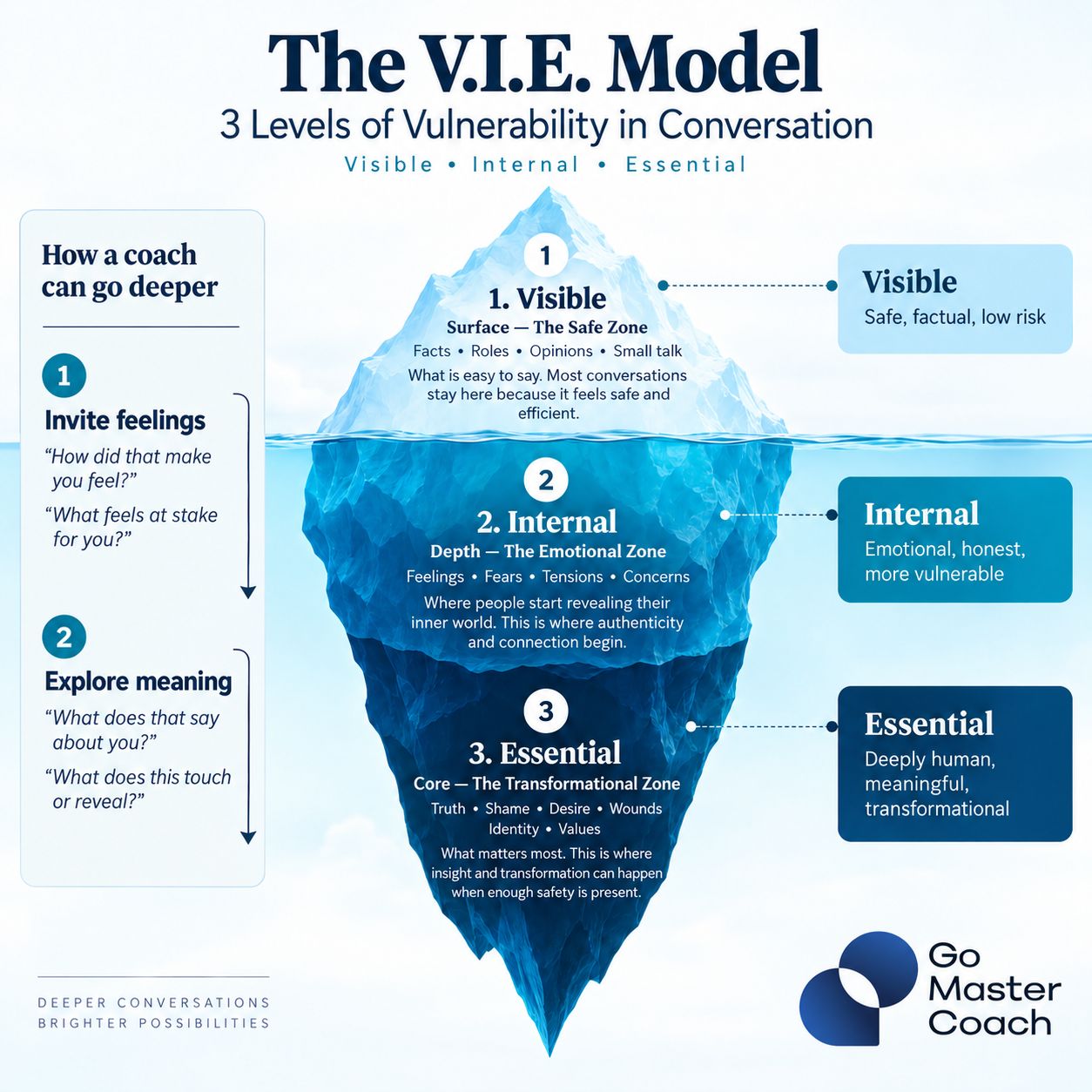
To help clients and coaches name what’s happening beneath the words, I created the V.I.E. Model of Vulnerability.
V.I.E. stands for Visible, Internal, and Essential.
(And vie also means “life” in French, because vulnerability is what brings conversations to life.)
This model doesn’t force depth. Instead, it helps you notice:
The V.I.E. Model doesn't ask you to push a conversation deeper. It helps you recognise:
Where the conversation currently is
What level of vulnerability is being offered
Whether it might be helpful to go deeper
Visible Level – What We Say
This is where most conversations begin, and often end.
Facts.
Stories.
Opinions.
Updates.
You’ll hear things like:
“It’s been a crazy week.”
“We’re under a lot of pressure right now.”
“The project is moving forward.”
At the Visible level, people describe what’s happening without sharing what it means to them.
These conversations are safe, efficient, and socially acceptable. They’re also where many coaching conversations stall because insight rarely emerges without some emotional risk.
Internal Level – What We Feel
This is where conversations start to open. Here, people begin to share:
Emotions
Doubts
Frustrations
Hopes or desires
You might hear:
“I’m exhausted.”
“I feel behind.”
“I’m not sure I’m handling this well.”
At the Internal level, the conversation shifts from reporting to relating. People feel seen, not just heard. This is often where trust deepens and momentum returns. Strong coaching conversations usually begin here.
Essential Level – Who We Are
The three levels aren't a ladder everyone needs to climb. A conversation can be valuable at the Visible level, and deeper sharing isn't always appropriate. What matters is noticing what the moment calls for and respecting the other person's readiness.
The Essential Level is the deepest level of vulnerability.
Here, people share things that feel personal, risky, and deeply human:
Identity statements
Core fears
Shame or self-doubt
Personal truth
Examples sound like:
“I’m scared I’ll never feel proud of myself.”
“I feel like I don’t belong in this role.”
This level requires psychological safety and presence. It’s not about fixing or advising. It’s about witnessing.
When someone is met well at the Essential level, meaningful change often begins. Not because a solution was offered, but because truth was allowed to exist.
Using the V.I.E. Model in Coaching and Leadership Communication
For coaches and leaders, the V.I.E. Model offers a simple but powerful lens. It helps you:
Notice the current level of vulnerability
Decide whether going deeper would be supportive
Invite honesty without forcing disclosure
Sometimes, all it takes is a gentle question:
“What’s this been like for you?”
“What feels hardest to say out loud?”
In my experience, the quality of the invitation matters more than the depth of the question. Give people time to respond, stay curious, and let them decide how much they want to share. In coaching and leadership conversations alike, trust grows when honesty is met with respect rather than pressure.
These are not dramatic interventions. They’re subtle invitations, and they’re skills we intentionally develop in our ICF-accredited coach training programs.
Vulnerability Is a Skill You Can Practice
Many people believe vulnerability is a personality trait, something you either have or you don’t.
What I see instead is this: People become vulnerable when they feel safe, respected, and not rushed.
Vulnerability isn’t oversharing.
It’s honesty at the right depth, at the right moment.
Not every conversation needs to reach the deepest level. And not every moment calls for emotional exposure.
But every conversation benefits from awareness:
Where are we right now?
What level of vulnerability is present?
Is something important staying unspoken?
When vulnerability increases, even slightly, conversations become clearer, more human, and more effective.
A Simple Question That Can Change How Conversations Unfold
If conversations feel polite but flat, try asking yourself:
What level of vulnerability are we speaking from and what level is being invited?
That awareness alone can shift how conversations unfold.
What helps you move conversations beyond surface talk? How do you invite vulnerability without pushing it?
If you'd like to deepen how you listen, ask questions and hold space for meaningful conversations, explore our ICF-accredited coach training programs. At GoMasterCoach, we practise these skills through real coaching conversations, reflection and feedback.
Frequently Asked Questions About Vulnerability in Conversations
What does vulnerability mean in a conversation?
Vulnerability means being willing to share genuine thoughts, feelings, concerns or uncertainties. It doesn't mean sharing everything; it means being honest at a level that feels appropriate and safe.
How can leaders encourage vulnerability at work?
Leaders can encourage vulnerability by listening without judgement, acknowledging concerns and responding respectfully when people speak honestly. Trust develops through consistent behaviour, not by asking people to open up before they feel ready.
How can coaches help clients become more vulnerable?
Coaches can create space for reflection through active listening, curiosity and open questions. The aim is not to push clients into deeper disclosure, but to help them explore what matters to them at their own pace.